
01
Branded equipment, on site
The team records blood pressure, blood glucose, height and weight, a short set of strength tests, plus ECG, haemoglobin and body composition.
Preventive Screening
Prevent. Perform. Progress. An expert team conducts the screening and records every check, and Phiawell writes the report on the spot.
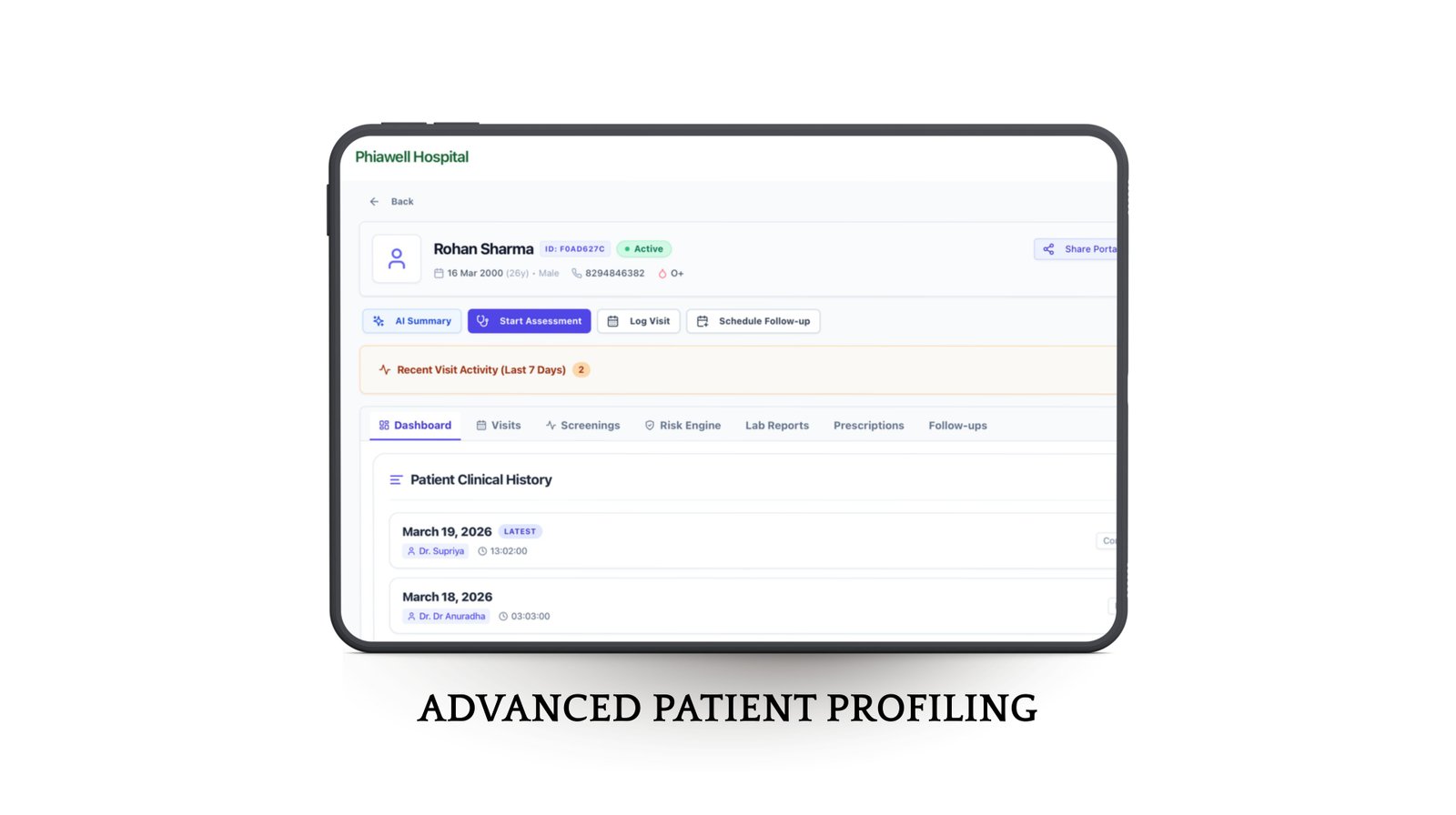
The same monthly visit that already screens your members now leaves a score, a derived read, and a nutrition note on one health record.
01
The team records blood pressure, blood glucose, height and weight, a short set of strength tests, plus ECG, haemoglobin and body composition.
02
Each measured value stays on the report. Beside it, Phiawell adds the band, the body age, the preventive score and a risk insight.
03
Meals, salt, sugar and activity are written from that same visit, then kept on the health record for the next screening.
Branded monitors record blood pressure, blood glucose, haemoglobin, ECG and body composition. Height and weight become BMI. A short set of strength tests is recorded as it was performed. The report uses only those inputs.
Systolic and diastolic, taken on a branded pressure monitor and filed against the member.
A point-of-care sugar reading from the visit, with the unit kept on the report.
Height and weight, recorded so body mass index can be calculated for that person.
A short set of strength tests, recorded as they were performed on the day.
The tracing from the visit is stored with the report for the clinician to read.
A point-of-care haemoglobin value, kept on the same health record as the other checks.
The composition check taken with the equipment, used for the body-age reveal.
Derived on the report
The report keeps every measured value, then adds only what those values can support. A preventive score and a body age come from the visit. Each reading sits beside a plain-language band. The risk insight covers blood pressure, blood sugar and the heart, using the same clinically recognised models already on the platform, including WHO-based frameworks. A confidence score rises when the visit is complete.
A clinician confirms anything that needs care. The screening read supports that conversation.
A sample read, not a patient: pressure in the usual band, sugar in the usual band, BMI in the usual band, haemoglobin in the usual band, strength recorded, body age and a preventive score from that visit.
Written from this visit’s BMI, glucose, blood pressure, haemoglobin, body composition and strength. It lives on the health record with the score.
Portion and meal direction follow the BMI band, so the next visit has something to compare.
Sugar-smart choices follow the glucose reading from the same day.
Salt awareness follows the blood-pressure reading, in plain language the member can use.
Activity and protein direction follow the strength tests and the body-composition check.
Haemoglobin is included when it was taken. The note is guidance from the screening. The clinic’s dietitian or clinician sets anything that is a prescribed diet.
The preventive score, the body age and the report are ready when the screening ends.
It holds the score, the report and the history from each visit.
Monthly screening, community challenges and habit coaching sit on the same health record.
Reset 20
Reset 20 is a 20-minute recovery protocol. It is built to help the body shift from stress toward recovery: calming the nervous system, easing stress-hormone dominance, relaxing muscle and supporting circulation.
It is a guided recovery session for modern, high-demand days. A clinician remains responsible for medical care.
20
Centres that want it can offer Reset 20 beside the monthly check. The screening report and the recovery session stay separate: one reads the visit, the other is the recovery time.